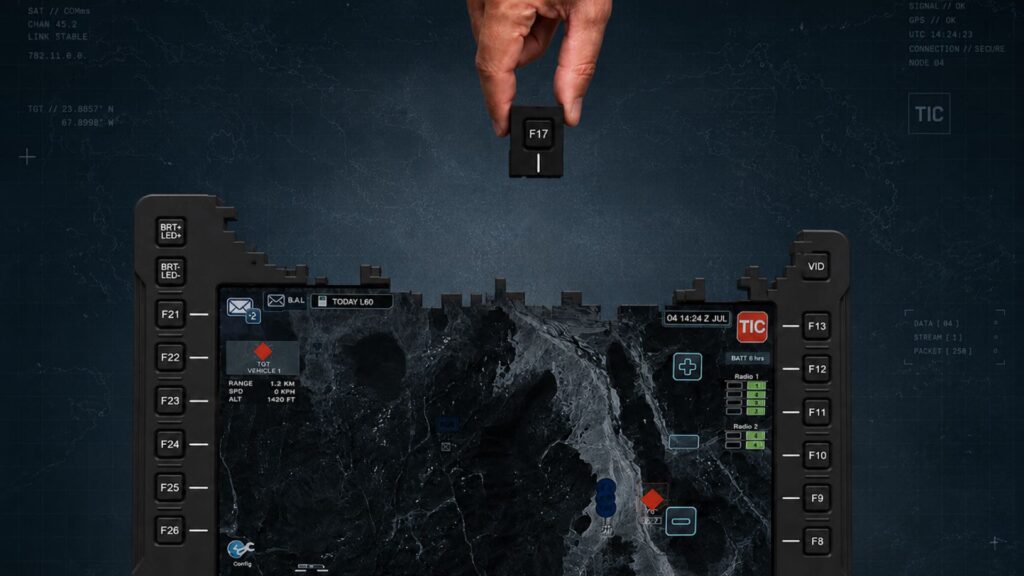
“I need it now. I need it at a commercial price point. And I need capabilities that do not exist in any catalog.”
This increasingly common customer requirement defines the challenge facing today’s rugged display industry.
The defense sector is undergoing its most significant transformation since the end of the Second World War. While the past seventy years delivered remarkable advances in sensors, computing, communications, and human-machine interfaces, defense acquisition cycles remained largely characterized by long development timelines, substantial program investments, and relatively predictable technology refresh intervals.
Recent conflicts, particularly in Ukraine, have demonstrated that operational advantage is increasingly determined by speed of adaptation rather than solely by scale of resources. The ability to rapidly integrate new sensors, autonomous systems, artificial intelligence applications, and digital battlefield technologies has become a decisive factor in military effectiveness. This shift has fundamentally altered expectations throughout the defense supply chain. Procurement organizations now seek faster development cycles, shorter deployment timelines, and lower acquisition costs while maintaining the ruggedness and reliability required for military operations.
The result is a growing preference for Commercial-Off-The-Shelf (COTS) technologies wherever practical. Rugged display systems are no exception. Modern AMLCD panels, touch technologies, embedded processors, and video interfaces developed for commercial markets provide significant advantages in cost, performance, and availability compared with traditional military-specific developments. This trend toward COTS adoption has been evident for decades and continues to accelerate as commercial display technologies advance.
However, the reality of military deployment rarely allows the direct use of standard commercial displays.
Ground combat vehicles, autonomous systems, command-and-control shelters, dismounted soldier equipment, naval platforms, and aerospace applications each impose unique requirements related to environmental performance, optical characteristics, power management, cybersecurity, communications architecture, human factors, and platform integration. Even when a commercially available display satisfies 80 to 90 percent of the requirements, a single mission-critical deviation frequently necessitates customization.
Once customization begins, additional requirements typically emerge. Customers often seek commonality across multiple platforms, future technology insertion capability, expanded operational functionality, interoperability with existing systems, or compliance with evolving open architecture standards such as MOSA, CMOSS, SOSA, and VICTORY. The rugged display increasingly becomes not merely a display device, but a configurable node within a larger digital battlefield ecosystem.
Consequently, the competitive advantage no longer belongs solely to manufacturers offering the broadest catalog of display products. It increasingly belongs to organizations capable of rapidly adapting proven technology building blocks into mission-specific solutions while maintaining the economics and lead times associated with COTS products.
Customization may range from relatively straightforward modifications such as:
- Integration of resistive or projected-capacitive touchscreens
- Enhanced sunlight readability
- Night Vision Imaging System (NVIS) compatibility
- Custom mechanical packaging
- Specialized connectors and cable interfaces
At the opposite end of the spectrum, customization may involve the development of:
- Complete display electronics architectures
- Embedded computing platforms
- Video management and distribution systems
- Secure communication interfaces
- Custom AMLCD integration
- Vehicle network interoperability
- Multi-domain cybersecurity requirements
- Artificial intelligence enabled human-machine interfaces
As autonomous systems and AI-enabled battlefield applications continue to proliferate, operators increasingly require rugged displays capable of serving as the primary interface between humans and complex digital systems. These displays must simultaneously support visualization, monitoring, command, control, and decision-making functions in harsh operational environments. The resulting requirements extend well beyond traditional display performance metrics and increasingly encompass system-level functionality.
Meeting these expectations requires a high degree of vertical integration across mechanical engineering, optical design, electronics development, firmware, software, environmental qualification, manufacturing, and lifecycle support. Suppliers possessing these capabilities can leverage common technology platforms and modular architectures to rapidly configure highly customized rugged display solutions without incurring the cost and schedule penalties traditionally associated with custom military developments.
The future of rugged displays is therefore unlikely to be defined by purely custom designs or purely commercial products. Instead, it will be shaped by the ability to rapidly transform mature commercial technologies into mission-specific systems through modular architectures, open standards, and vertically integrated engineering and manufacturing capabilities.
In an environment where operational requirements evolve faster than traditional acquisition cycles, the defining characteristic of successful rugged display providers may no longer be their ability to build a display. It will be their ability to adapt one faster than anyone else.

